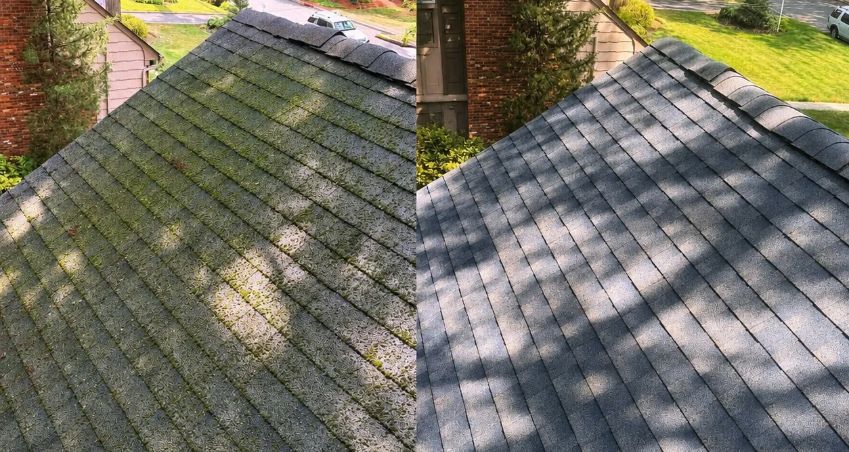
Black streaks on asphalt shingles are often a result of algae. A professional, low-pressure roof cleaning may remove or reduce the discoloration, but not every dark spot calls for a wash. Missing shingles, visible damage, leaks, or sagging areas need attention from a roofer first.
If you notice dark streaks on your Bergen County home, start by understanding what may be causing them. Here’s what roof cleaning can address, when to bring in a roofing professional, and what to expect from the cleaning process.
On this page
What Causes Black Streaks on Roof Shingles?
According to the Asphalt Roofing Manufacturers Association (ARMA), algae-related roof discoloration is common throughout the United States and Canada. It typically appears brown or black and may look like streaks running down the roof or broader areas of darkening.
One common contributor is Gloeocapsa magma, an airborne algae that can settle on roofing materials. Warm, humid conditions support its growth, and the discoloration tends to be more noticeable on lighter-colored shingles.
These streaks can affect a roof’s appearance without necessarily indicating that the shingles need replacement. However, algae isn’t the only possible cause of dark discoloration.
Algae Can Be Mistaken for Other Roof Stains
Dirt, soot, fungus, moss, and tree debris can all contribute to roof discoloration. From the ground, it isn’t always easy to tell them apart.
For example, dirt and debris may accumulate beneath overhanging trees, while algae can create broader streaks across shingle surfaces. A dark patch in one area may also have a different cause than discoloration across the entire roof.
Identifying the buildup matters because different materials and types of growth require different cleaning approaches.
Moss Is a Different Problem
Algae and moss shouldn’t be treated as the same issue. While algae typically causes discoloration, moss can affect the physical condition of asphalt shingles.
Moss can grow along shingle surfaces, lift shingle edges, and contribute to moisture problems if left unchecked. ARMA recommends consulting your shingle manufacturer about moss removal and appropriate treatment methods.
If you see visible moss or lichen, have the growth evaluated before scheduling a cleaning. The appropriate approach depends on the roofing material and manufacturer recommendations.
When Roof Cleaning Makes Sense
If the shingles are in suitable condition and an assessment identifies algae or other removable surface growth, professional roof cleaning may be a reasonable option.
Cleaning may be worth considering if you notice:
Black algae streaks across otherwise intact asphalt shingles
Gradual darkening or discoloration that has become more noticeable over time
Surface buildup affecting the appearance of your roof
Organic growth that a professional has determined can be treated safely
The goal is to address surface buildup without putting unnecessary stress on the roofing material.
Why Pressure Washing Is the Wrong Approach for Asphalt Shingles
Asphalt shingles have protective granules that help shield them from sun exposure and weather. High-pressure washing, aggressive brushing, or scrubbing can loosen and remove those granules, potentially shortening the life of the roofing material.
The Asphalt Roofing Manufacturers Association specifically advises against using power washers, brushes, or brooms to remove algae from asphalt shingles. It also recommends following the shingle manufacturer’s instructions when selecting cleaning products and methods.
A-1 uses low-pressure soft washing for roof cleaning in Bergen County. Rather than blasting the shingles with high-pressure water, soft washing applies a cleaning solution at low pressure, allows time for it to work on organic growth, and uses a gentle rinse.
You can learn more about the process and where it’s appropriate on our soft washing page.
What to Expect From Roof Cleaning
Soft washing can improve the appearance of a roof by treating algae and other organic buildup. However, it does not repair damaged shingles or guarantee that discoloration will never return.
ARMA notes that algae staining can reappear over time. Airborne algae can settle on roofing surfaces again, particularly where moisture and shade create favorable conditions.
Roof cleaning is best viewed as exterior maintenance, not a permanent treatment or substitute for roofing repairs.
When to Call a Roofer First
Roof cleaning addresses surface buildup. It does not repair leaks, replace shingles, or correct structural problems.
Before scheduling a wash, have a qualified roofer inspect the property if you notice:
Water stains on ceilings or in the attic
Active leaks or signs of moisture intrusion
Missing, cracked, curling, or lifted shingles
Bare areas where protective granules appear to be missing
Sagging roof sections or visibly uneven areas
Damaged flashing around chimneys, vents, or skylights
Signs of storm damage, such as damage following high winds or fallen branches
These conditions need attention beyond surface cleaning. A roofer can evaluate the shingles, flashing, and underlying structure to determine whether repairs or replacement are necessary.
If you’re already planning to replace your roof, ask about algae-resistant shingles. ARMA notes that these products are available and may help reduce future algae discoloration.
Leave Roof Inspections and Cleaning to Professionals
Walking on a roof can be dangerous, especially when shingles are wet or treated with cleaning solutions. Foot traffic can also cause unnecessary wear.
You don’t need to climb a ladder to investigate black streaks. Look at the roof from the ground, use binoculars if needed, and let trained professionals handle inspections and work that requires roof access.
Don’t Overlook Your Gutters
Gutters help move rainwater away from your roofline and foundation. When leaves and debris collect inside, water may overflow instead of draining properly.
If you’re scheduling roof cleaning, it’s a good opportunity to check the gutters as well. Keeping them clear helps manage roof runoff and prevents water from spilling over onto siding, landscaping, and walkways.
A-1 offers gutter cleaning that can be scheduled alongside roof cleaning, making it easier to address multiple exterior maintenance needs during the same visit.
When Should You Schedule Roof Cleaning?
The best time for roof cleaning depends on the roof’s condition, weather, and the requirements of the cleaning products being used.
Bergen County homeowners may notice algae streaks becoming more apparent during warmer, humid months. If you spot discoloration during colder weather, you can still request an assessment and discuss when treatment would be appropriate.
There’s no need to wait for a particular season if you’re concerned about organic growth. However, the weather must be suitable for proper application and rinsing.
If your roof, gutters, siding, or other exterior surfaces need attention, scheduling related maintenance together may help simplify property upkeep.
Frequently Asked Questions About Black Streaks on Roofs
Black streaks on asphalt shingles are often caused by algae, particularly Gloeocapsa magma. However, dirt, soot, moss, and other debris can cause similar discoloration. An assessment can help identify the cause before you choose a cleaning method.
No. High-pressure washing can loosen and remove the protective granules on asphalt shingles. ARMA advises against power washing, brushing, and scrubbing. A suitable low-pressure cleaning method should follow the shingle manufacturer’s recommendations.
No. Soft wash roof cleaning removes surface buildup but cannot repair leaks, replace missing shingles, or fix damaged flashing. Have a qualified roofer evaluate these problems before scheduling cleaning.
They can. Airborne algae may settle on roofing surfaces again over time. Shade, moisture, and surrounding environmental conditions can influence how quickly discoloration returns.
Not necessarily. Algae discoloration can affect the appearance of otherwise serviceable shingles. However, missing shingles, leaks, sagging, and other signs of deterioration warrant a roofing inspection. A roofer can assess the roof’s actual condition.
Roof cleaning costs vary based on the roof’s size, pitch, material, accessibility, and how much buildup needs to be removed. A professional cleaning estimate is the best way to determine the cost for your home.
Schedule Professional Roof Cleaning With A-1
Black streaks can make an otherwise well-maintained home look neglected, but they don’t automatically mean your roof needs expensive repairs or replacement.
A-1 Pressure Washing provides professional roof cleaning throughout Bergen County, NJ, using low-pressure soft washing to address roof algae and other organic buildup. We also take precautions to protect surrounding landscaping during the cleaning process.
If your roof has known leaks or visible damage, have a roofer inspect it before scheduling a wash.
Contact A-1 Pressure Washing for a free roof cleaning estimate and find out whether soft washing is appropriate for your home.