Professional paver cleaning removes dirt, algae, moss, and other buildup from paver surfaces and joints. However, washing cannot repair sunken pavers, fix a shifting base, or replace cracked stones. Some old or deeply set stains may also lighten without disappearing completely. Understanding the difference between cleaning and restoration helps you know what to expect before scheduling service.
In Bergen County, patios, walkways, and pool surrounds face humid summers, falling leaves, winter salt, and changing temperatures. These conditions contribute to organic growth, staining, and general surface discoloration. Professional paver cleaning can remove much of that buildup and restore a cleaner appearance without the need for more extensive work.
On this page
What Professional Paver Cleaning Can Fix
Brick and concrete patio pavers have porous surfaces that collect dirt, moisture, and organic growth. Over time, algae, moss, and everyday debris can make patios and walkways look discolored or neglected.
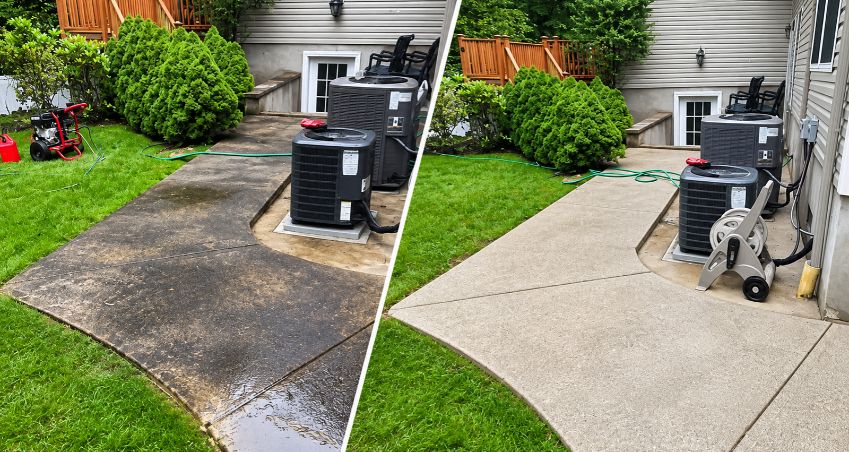
Professional paver washing removes much of this buildup from the surface and between pavers, helping restore the appearance of your outdoor spaces.
Algae, Moss, and Other Organic Growth
Shaded patios, walkways near downspouts, and areas surrounded by landscaping can develop green or dark organic growth. Besides affecting appearance, algae and moss can make hardscape surfaces slippery when wet.
Professional pressure washing removes this surface growth and cleans buildup from between pavers. A-1 adjusts its cleaning approach to the surface material and condition to achieve a thorough clean without unnecessary damage.
Ground-In Dirt and General Discoloration
Foot traffic, pollen, fallen leaves, and soil splash gradually dull the appearance of pavers. This buildup can make an otherwise well-maintained patio look older than it is.
Removing accumulated dirt and debris often brings back much of the original color of brick and concrete pavers, making the entire outdoor area look cleaner.
Common Stains on Pavers
Some stains require more than standard pressure washing. Oil, rust, and organic staining may need targeted pretreatment before cleaning.
A-1 uses targeted pretreatment and professional equipment to address difficult stains on concrete and hardscape surfaces. The appropriate cleaning method depends on the material and the type of staining.
Many marks can be reduced or removed, but results depend on the stain’s cause, age, and depth. Older stains that have penetrated the material may remain partially visible.
For more information about the hardscape surfaces A-1 cleans, including bluestone, flagstone, brick, and concrete, visit our concrete, patio, and paver washing service page.
What Paver Cleaning Can’t Fix on Its Own
Cleaning and restoration address different problems. While pressure washing improves the appearance of pavers, restoration involves physical repairs to the pavers, joints, or underlying base.
Here are some issues that require more than a professional wash.
Uneven, Sunken, or Shifting Pavers
Pavers that have settled, heaved, or shifted out of position may have underlying base, drainage, or installation problems.
Pressure washing can remove dirt and buildup, but it cannot level an uneven patio or correct the conditions causing pavers to move. A qualified hardscape or paver repair contractor should evaluate these areas and determine what repairs are needed.
Cracked, Chipped, or Broken Pavers
Washing will not fill cracks, repair chipped edges, or replace broken pavers. A paver repair professional can determine whether damaged units need replacement or whether additional work is necessary.
If your patio has both surface buildup and visible damage, cleaning and repairs may both be needed. They simply address different concerns.
Joint Sand and Paver Sealing
Joint sand fills the spaces between individual pavers and helps keep them in position. Over time, weather, erosion, weeds, and other factors can affect the condition of these joints.
Professional paver cleaning also addresses organic growth between pavers. However, aggressive or improperly performed washing can displace joint sand. A-1 uses appropriate pressure levels for paver surfaces to clean effectively while avoiding unnecessary disruption to the joints.
Re-sanding and sealing are separate maintenance services. If your joints have significant sand loss or your pavers need additional protection, consult a qualified paver professional about the appropriate next steps.
The Concrete Masonry & Hardscapes Association’s maintenance guidance also discusses how routine cleaning can gradually remove joint sand.
One other distinction worth knowing: driveway sealcoating is designed for asphalt driveways. It is not the same as applying a sealer to concrete or brick pavers, and the two services are not interchangeable.
Old or Deeply Set Stains
Not every stain responds the same way to professional cleaning. Oil, rust, and other substances can penetrate porous materials over time, making some discoloration difficult to remove completely.
Pretreatment and professional equipment can improve the results, but an older stain may leave a visible shadow even after cleaning.
A realistic assessment before work begins helps you understand what can reasonably be achieved rather than expecting every mark to disappear.
Why Paver Material and Condition Matter
Not all hardscape surfaces respond to cleaning in the same way. Concrete pavers, clay brick, and natural stone such as bluestone and flagstone have different characteristics that influence the appropriate cleaning method.
The age and condition of the installation also matter. Older pavers, loose joints, and existing surface damage may require additional care.
Choosing the Right Cleaning Method
There is no single pressure setting or cleaning solution that works for every patio. The appropriate approach depends on several factors:
Paver material: Concrete, brick, and natural stone have different surface characteristics.
Existing condition: Older, worn, or damaged pavers may need a more careful approach.
Type of buildup: Dirt, algae, moss, and oil stains may require different cleaning methods.
Joint condition: Loose or deteriorating joint sand needs consideration before washing.
Using excessive pressure can damage paver surfaces or displace joint material. Professional equipment and proper technique help remove buildup while protecting the surrounding hardscape.
Questions to Ask Before Scheduling Paver Cleaning
Before hiring a power washing company, consider asking:
What type of pavers do I have, and does that affect the cleaning method?
Which stains are likely to come out, and which may only lighten?
Are there loose, sunken, or damaged areas that need repairs?
Will the cleaning method account for the condition of the joints?
Are re-sanding or sealing services included, or would those require separate work?
These questions help establish realistic expectations and clarify whether cleaning alone will address your concerns.
When Should You Schedule Paver Cleaning?
Many Bergen County homeowners schedule hardscape cleaning in spring, after winter salt and debris have accumulated, or in fall before outdoor entertaining season winds down.
However, there is no universal cleaning schedule for every paver patio. Shaded areas, heavy foot traffic, nearby landscaping, and moisture exposure all influence how quickly dirt and organic growth return.
If your patio, pool surround, or walkway is developing visible algae, moss, or discoloration, it may be time to consider professional cleaning.
Paver washing can also be scheduled alongside other exterior cleaning services. For delicate exterior materials such as siding, our soft washing services use a low-pressure cleaning approach. Property managers and business owners can also learn about commercial pressure washing.
Frequently Asked Questions About Paver Cleaning
Professional cleaning can remove or reduce many common stains, including dirt, algae, and some oil and organic staining. However, older stains that have penetrated porous pavers may not disappear completely.
No. Pressure washing removes surface buildup but cannot level sunken pavers or correct underlying base and drainage problems. A qualified paver repair contractor should evaluate uneven areas.
Do not assume either service is included in a standard cleaning estimate. Re-sanding and sealing are separate maintenance tasks. Ask your paver professional whether your installation needs either service.
Cleaning frequency depends on the amount of foot traffic, shade, moisture, and organic growth around your property. Some homeowners schedule seasonal cleaning, while others need less frequent service. An assessment can help determine an appropriate schedule.
Yes, improper pressure or technique can damage paver surfaces and displace joint sand. A professional should consider the material, existing condition, and joint stability when selecting the cleaning approach. A-1 adjusts pressure levels to clean pavers effectively while protecting their surfaces.
Get an Honest Assessment of Your Pavers
If your patio, walkway, or pool surround looks worn, the first step is determining whether it needs cleaning, repairs, or both.
A-1 Pressure Washing is a family-owned exterior cleaning company serving homeowners throughout Bergen County, NJ. We use professional equipment and surface-appropriate cleaning methods to remove dirt, algae, moss, and other buildup from concrete, brick, and paver surfaces.
We’ll help you understand what professional cleaning can accomplish and what may require additional work.